
 Schedule of Classes
 Maps
Maps Canvas
 Directory
 Library
 LancerPoint
 Calendars
 Bookstore
 Student Email
 News & Events
 Police & Safety
 PCC Connect
 Parking
 COVID-19 Info
Defining & Categorizing Work-Based Learning Activities at PCC
Categorizing WBL Based on the CCC Chancellor’s Office Management Information Systems (MIS) Data Reporting Protocol*
What is Work-Based Learning (WBL)?
WBL is a term that includes a wide variety of career-related activities in which students engage with industry professionals, including:
- Career awareness/exploration activities such as career fairs, industry guest speakers, or industry site visits/workplace tours (known as Category “C” WBL*)
- Career interaction activities such as job shadowing or classroom projects with industry involvement (known as Category “B” WBL*)
- Career training activities such as internships or clinical experience (known as Category “A” WBL*)
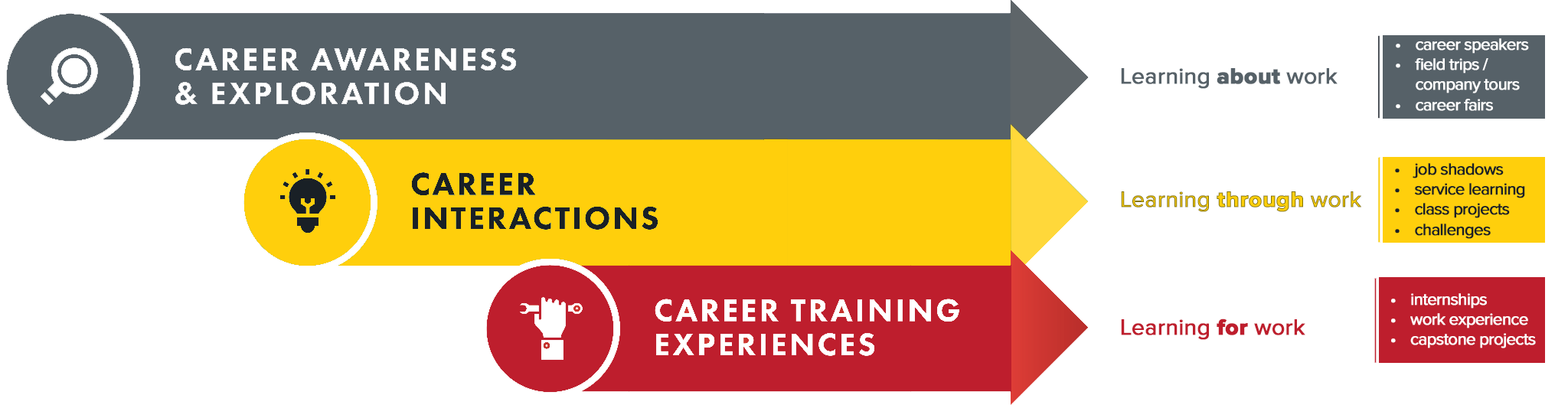
In order for an activity to qualify as WBL at PCC, the following two key criteria* must be met:
- The activity must be related to career development
- Note: this means any activity that does not include any elements of career development, such as a cultural event, a transfer-related event, etc. would not be considered WBL at PCC unless it also explicitly includes a career component
- The activity must include involvement with an industry professional
- Note: Faculty/Staff are not technically considered “Industry Professionals” when they teach and/or host an event, as they’re acting as a representative of the educational institution and their industry/subject-matter expertise is per Education Code
- If the faculty/staff is currently actively involved in industry via employment, a volunteer position, or something similar, they may qualify as an “industry professional” for category “C” WBL, but not category “A” or “B” WBL (more on A/B/C-categories below)
| Category A: Career Training Experiences Learning for work |
Category B: Career Interactions Learning through work |
Category C: Career Awareness & Exploration Learning about work |
|---|---|---|
|
Students participate in work-based learning preparing the student for employment in a specific range of occupations. Examples include:
|
Students participate in work-based learning allowing the student to apply learning through practical experience and interaction with professionals from industry and the community outside of school. Examples include:
|
Students participate in work-based learning allowing the student to build awareness of the variety of careers available, begin identifying areas of interest, and explore career options. Examples include:
|
|
In order to qualify as Category “A” WBL, all of the following must be answered “yes”:
|
In order to qualify as Category “B” WBL, all of the following must be answered “yes”:
|
To qualify as Category “C” WBL, all of the following must be answered “yes”:
|
PCC-Specific Examples of Course-Level WBL
| Examples of Category “A” WBL at PCC: Career Training Experiences |
Examples of Category “B” WBL at PCC: Career Interactions |
Examples of Category “C” WBL at PCC: Career Awareness & Exploration |
|---|---|---|
|
|
|
PCC-Specific Examples of Co-Curricular WBL
| Category A: Career Training Experiences Learning for work |
Category B: Career Interactions Learning through work |
Category C: Career Awareness & Exploration Learning about work |
|---|---|---|
|
|
*These categories and criteria come directly from guiding documents from the California Community College Chancellor’s Office, including:
- Chancellor’s Office MIS Data Element XB09: https://webdata.cccco.edu/ded/xb/xb09.pdf
- Chancellor’s Office MIS Data Element SG21: https://webdata.cccco.edu/ded/sg/sg21.pdf
Official WBL Definition: “Sustained interactions with industry or community professionals in real workplace settings, to the extent practicable, or simulated environments at an educational institution that foster in-depth, firsthand engagement with the tasks required in a given career field, that are aligned to curriculum and instruction.” Source: Perkins V Sec. 3. [20 U.S.C. 2302] (55)