
 Schedule of Classes
 Maps
Maps Canvas
 Directory
 Library
 LancerPoint
 Calendars
 Bookstore
 Student Email
 News & Events
 Police & Safety
 PCC Connect
 Parking
 COVID-19 Info
Winter: Kyoto, Japan
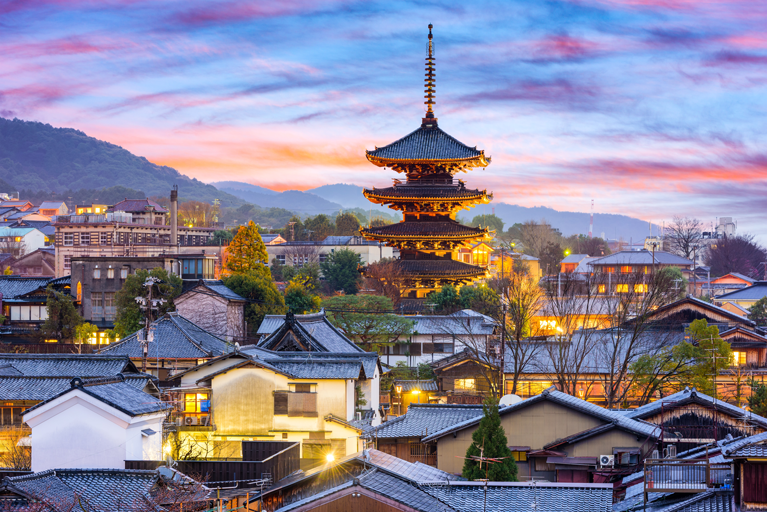
Kyoto, home of Pasadena City College's Winter 2027 Study Abroad program, is one of the most popular tourist destinations in Japan. Once Japan's imperial capital for more than a thousand years, Kyoto offers an unforgettable blend of atmospheric temples and shrines, exquisite cuisine, and a remarkable legacy of history, artistry, and tradition that continues to inspire visitors from around the world.
Discover the iconic Fushimi Inari Shrine with its thousands of vermilion torii gates, marvel at the golden beauty of Kinkaku-ji (the Golden Pavilion), stroll through the historic Gion district where geisha traditions endure, visit centuries-old Zen temples and peaceful gardens, and experience Kyoto's renowned tea culture. Kyoto is a city where history, culture, and natural beauty come together to create endless opportunities for exploration and learning. Join PCC Study Abroad for an unforgettable adventure in the cultural heart of Japan!
Program Dates
January 4 to February 12, 2027
- January 4: Program starts at PCC
- January 8-9: Group travels to Japan
- January 10: Program continues in Kyoto
- February 12: End of program. Group returns to U.S.
Program Fee
$7,790 (airfare included)Price based on 20 students. Excludes airline taxes & PCC tuition.
Information Sessions
Meet the faculty & learn more about the program at an information meeting!
Noon Sessions
- August 14 (Zoom)
- September 14 (C-217)
- September 25 (Zoom)
6:00 pm Sessions
- August 17 (Zoom)
- September 14 (C-217)
Virtual sessions can be attended with this Zoom Meeting ID: 823 4961 4231
Program Dates
- January 4 - 7: Program starts at PCC
- January 8: Group flight departs U.S. for Japan
- January 9: Group flight arrives in Kyoto, transfer to accommodations
- January 10: On-site orientation & walking tour
- January 11: Classes resume in Kyoto
- February 12: End of program. Group flight departs Kyoto for U.S.
Program Fees
$7,790 (airfare included)
Excludes airline taxes & PCC tuition. Based on a minimum enrollment of 20 students.
Program Includes:
- Roundtrip airfare between Los Angeles (LAX) and Kansai (KIX) international airports
- Roundtrip transfers in Kyoto between airport and student housing
- Accommodation in shared, self-catering, studio apart-hotel units
- Welcome & farewell dinners
- IC smart-cards for travel on JR trains, trams, subways & buses in Kyoto metropolitan area
- Pre-departure & on-site orientation program
- Introductory walking tour of the local area
- Guided visits to select Kyoto cultural sites & museums
- Traditional Japanese cooking class
- A tea ceremony
- Full-day excursion to Nara
- On-site faculty, student support staff, and 24-hour emergency contact service
- Medical insurance policy
- Liability insurance
Program fee does not include:
- Mandatory U.S. government and airline-imposed departure taxes, fees and fuel surcharges of $405 (subject to change)
- Meals other than those listed
- Optional trip to Hiroshima ($870)
- Optional Extra Protection Insurance Coverage, including increased medical insurance
- Optional trip interruption or cancellation insurance
- Passport and visa fees, if applicable
- PCC course registration fees
- Textbooks
- Personal expenses
| Item: | Fee: | Deadline: |
| Enrollment Deposit | $450.00 | Due immediately upon acceptance into program |
| Remaining Balance of Fees | $7,340.00 | November 13, 2026 |
| Airline Taxes (estimate) | $405.00 | November 13, 2026 |
| Total | $8,195.00 | |
| Optional Components: | Fee: | Deadline: |
| Trip Interruption or Cancellation Insurance | varies | Within 21 days after deposit is paid |
| Extra Protection Insurance Coverage | $65.00 | November 13, 2026 |
| Optional trip to Hiroshima | $870.00 | November 13, 2026 |
All students must submit a $450 deposit upon acceptance into the program and when completing the online enrollment form.
Program fee payments, including the deposit, will be made directly to our partner American Institute for Foreign Study (AIFS). Program fees will not be collected by the Pasadena City College Study Abroad Office or by program faculty.
Payments may be made by check or credit card. Checks should be made payable to "AIFS". American Express, MasterCard and Visa are accepted.
Please note: A $35 returned check fee will be charged on all checks returned by the bank for insufficient funds.
Group Airfare Package
The group airfare package includes round-trip airfare between Los Angeles (LAX) and Kansai (KIX) international airports in economy/standard class, and round-trip transfers in Kyoto between the airport and student housing, on the regularly scheduled program dates.
AIFS will book flights only on the dates indicated for this program.
Participants wishing to purchase the airfare package (which is included in the program fee, excluding airline taxes) must select this option on the online enrollment form. AIFS cannot arrange airline tickets for students after October 15, 2026. Land-only packages, without airfare, may be offered to students after this date.
Tickets are exclusively on scheduled airlines (not charters). They are not endorsable to another carrier. Flights are not necessarily direct or non-stop, they cannot be rerouted, and frequent flyer miles are not applicable. No refunds are available for any unused portion of ticket. Once airline tickets have been issued to students, they can only be changed directly with the issuing agent - agent and airline-imposed penalties apply.
A minimum of 10 participants is required for the group airfare package to be offered.
AIFS Refund Policy
If a participant withdraws on or before Thursday, October 15, 2026, they will receive a refund for all fees paid less a $150 processing fee.
If a participant withdraws after Thursday, October 15, 2026, but on or before Friday, November 13, 2026, they will receive a refund for all fees paid less the $450 deposit and any non-refundable deposits paid by the participant or by AIFS on the participant's behalf.
If a participant withdraws after Friday, November 13, 2026, they will receive no refund and the total program fee is due.
After the final payment deadline the full program fee is due to AIFS even if you have not yet paid and no longer plan to participate in the program.
Non-refundable financial commitments have been made to secure your spot. If a participants withdrawals once the program has begun, there is no refund.
This refund policy applies whether a participant pays AIFS Abroad directly for all, part, or no program fees.
Courses
COURSE OFFERINGS
Participants must enroll in both program courses for a total of 6 units.
| Course No. | Course Name | Units |
| ANTH 002 | Cultural Anthropology | 3 |
| HUM 001 | Introduction to the Humanities | 3 |
* All courses are CSU/UC transferable.* Honors Program credit for those who qualify
ANTH 002 - Cultural Anthropology: This course will focus on the study of Japanese society and culture from an anthropological perspective. We will start by learning how anthropologists do what they do by reading the work of contemporary anthropologists who work in Japan. From there we will study Japanese culture as a set of values and behaviors. We will learn about the complexities of Japanese food, including the historical development of Japanese cuisine as well as the seasonal cycle and complex symbolic meanings behind the food. We will take a class field trip to Kyoto’s 400-year-old Nishiki market, which houses over 100 food stalls on a covered street. Our stay also coincides with Kyoto’s biggest annual festival, the Gion Matsuri, which includes many opportunities to partake in street food and other culinary delights. We will study the history and evolving nature of ie (the Japanese family system), urbanization, and the importance of maintaining connection to furosato, one’s home village. The course will cover the practices and beliefs of Buddhism and Shintoism, Japan’s two main religions. Visits to temples and shrines, as well as other important religious sites will complement readings and lectures. We will examine several Japanese expressive arts in depth, including the famous tea ceremony, which originally developed during the time that Kyoto was Japan’s cultural and political capital, during the Heian period (794-1185). Students of Japanese culture have long asserted that the tea ceremony is the quintessential constellation of Japanese values and aesthetics. We will also study the Japanese art of furoshiki (cloth wrapping), reading an ethnographic study about it, observing demonstrations, and learning the art ourselves as part of our course. The course concludes with a look at contemporary Japan and the challenges Japanese people face as they look toward the future.
HUM 001 - Introduction to the Humanities: The course offers an overview of the history, art, literature, and culture of Japan from its ancient past to the present day. We will begin by studying early history including the prehistoric, classical, and medieval time periods. We will do a day trip to the nearby city of Nara, which served as the Japanese capital during the Nara period, from 710-794. Kyoto succeeded Nara as capital during the Heian period (794-1185) and together these two periods saw a flourishing of Japanese arts as Buddhism transformed Japan, spreading from China. In both Nara and Kyoto we will visit numerous sites, including temples, shrines, museums, and other historical places connected to our readings. Much of our course will focus on modern Japan, from the Meiji period (1868-1912) to the present. We will study the townscape of Kyoto itself, including the growth of Kyoto as a tourist destination and the preservation of the machiya, the traditional wooden house that is common throughout Kyoto. With Kyoto as our classroom we will take walking tours around the city and immerse ourselves in Japanese art, aesthetics, and design. Some of Japan’s most famous traditional arts and crafts were developed in the Kyoto area and surrounding Kansai region. At Kyoto’s Museum of Traditional Crafts we will see demonstrations from artisans still practicing these ancient arts. We will study a variety of art forms including shigaraki pottery, nishijin-ori silk-weaving, cloisonné enamelwork, and shibori resist dying all by taking fieldtrips to various museums and contemporary schools dedicated to these beautiful arts. We will study the aesthetics and philosophy behind traditional Japanese gardening by visiting famous temples and gardens, including the Kyoto Imperial Palace and Saihō-ji, Kyoto’s famous moss garden. Finally, we will focus on contemporary Japanese art and culture. For the anime and manga enthusiast, we will visit the Kyoto Manga Museum and the anime shops on Kyoto’s Teramachi street as we study the rise of “soft power” in Japan since the 1990s.
Program Faculty
Dr. Derek Milne, Anthropology
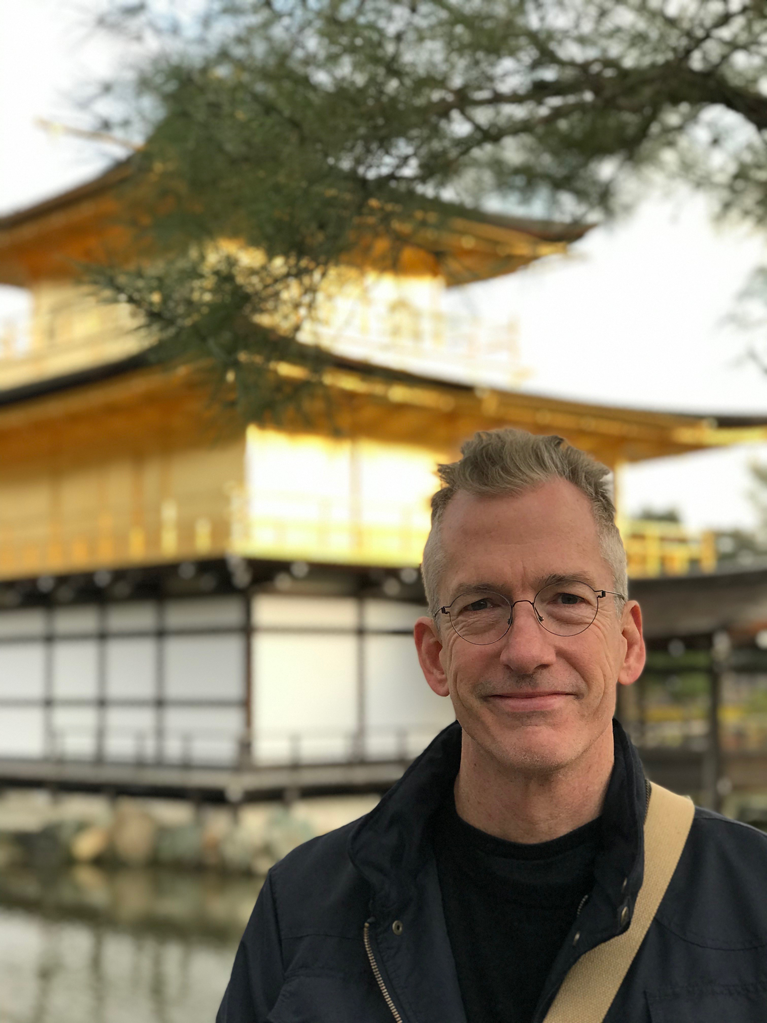 Dr. Derek Milne has taught Anthropology at Pasadena City College for 21 years. He
received his doctorate from UCLA where he has taught courses as a lecturer since 2012
and was a Visiting Researcher in 2017-18. He has done long-term fieldwork with Diné
(Navajo) American Indians in the U.S. Southwest, studying religious healing and various
medical and public health-related topics. Since 2015 he has done field research in
Papua New Guinea, focusing on sorcery and witchcraft beliefs. In 2018 he was awarded
PCC’s Risser Outstanding Teacher Award and he has previously led three PCC Study Abroad
programs to Oxford, England, Florence, Italy, and Kyoto, Japan. Dr. Milne is a life-long
“Japanophile.” Japan is his favorite place to visit in the world and even his dog
is Japanese!
Dr. Derek Milne has taught Anthropology at Pasadena City College for 21 years. He
received his doctorate from UCLA where he has taught courses as a lecturer since 2012
and was a Visiting Researcher in 2017-18. He has done long-term fieldwork with Diné
(Navajo) American Indians in the U.S. Southwest, studying religious healing and various
medical and public health-related topics. Since 2015 he has done field research in
Papua New Guinea, focusing on sorcery and witchcraft beliefs. In 2018 he was awarded
PCC’s Risser Outstanding Teacher Award and he has previously led three PCC Study Abroad
programs to Oxford, England, Florence, Italy, and Kyoto, Japan. Dr. Milne is a life-long
“Japanophile.” Japan is his favorite place to visit in the world and even his dog
is Japanese!
Email: dbmilne@pasadena.edu
Meals & Accommodations
Accommodations are provided in a tourist-class, self-catering, apart-hotel located within a 30-minute commute of the classroom. Two students will share a studio apartment, which includes two twin beds, linens, a small kitchenette, laundry facilities, Wi-Fi.
Self-catering studios include kitchenettes for meal preparation, with basic cooking equipment, plates, glasses, and utensils.
Excursions & Activities
Orientation Program
- A series of pre-departure orientations covering topics such as "To Do" action items, banking, cell-phone options, adaptors, what to pack, airport security, customs & immigration, and more.
- On-site orientation upon arrival covering topics such as general acclimation to Kyoto, safety and security issues, cultural differences, travel, and cultural activities
- Local area walking tour covering housing and classroom location and local amenities.
Activities
- Guided walking tour of the Gion district
- Guided walking tour of the Philosopher's Path with temple visit
- Guided tour of Nijo Castle
- Visits to Kyoto National Museum, Kyoto Museum of Craft and Design & Gion Kagai Art Museum
- Guided tour of Fushimi Inari
- Traditional Japanese cooking class
- Tea ceremony
- Welcome & farewell dinners, and much more!
Excursion
Full-day guided excursion to Nara, known for its Daibutso (Great Buddha) and sacred deer. Visit includes a walking tour of the historical park and visits to Todai-ji, Kasuga Shrine, Kofukuji National Treasure Hall, and Nara National Museum.
Optional Weekend Trip to Hiroshima ($870)
Experience a memorable three-day, two-night journey to Hiroshima by train.Your stay includes two nights in a centrally located twin-bedded hotel with daily breakfast. The itinerary features visits to the Hiroshima Peace Memorial Museum and the Atomic Bomb Dome. The journey also includes a full-day excursion to the picturesque island of Miyajima with its iconic floating torri gate, and a visit to Japan's feudal Himeji Castle.
A minimum of 15 participants is required for this excursion to run.
Apply to Study in Kyoto!
To be eligible for the program, you must be at least 18 years old by the day of departure and have a minimum overall GPA of 2.0. You do not need to be a PCC student to apply—students, community members, and individuals from a variety of educational backgrounds are welcome.
A limited amount of space is available. Apply early!
The Kyoto 2027 application is closed.