Latino Working Class Project summit will bring together leaders from business, labor, higher education, and philanthropy to explore how California can create more opportunities for working families to get ahead
As California families grapple with the rising cost of living and an increasingly uncertain path to economic security, the Latino Working Class Project (LWCP) will convene leaders at Pasadena City College on September 30 to examine what it takes to get ahead in California today.
California’s Next Economy: Building Pathways to Economic Mobility will explore how education, workforce training, employers, and labor can evolve to better serve working-class Californians and their families.
The conversation is informed in part by LWCP’s research into the experiences and aspirations of California’s Latino working class. In a recent statewide survey of 600 Latino likely voters, 94% said the cost of living was extremely or very important, while 64% said California is on the wrong track. But the findings also point to an enduring aspiration to get ahead: 64% responded positively to a message centered on the idea that hard work should allow families to build a better life for their children—not simply get by.
“California’s Latino working class is telling us very clearly that affordability and economic opportunity are shaping how they see their future in this state,” said Mike Madrid, executive director of the Latino Working Class Project. “The aspiration to build a better life is still there, but the status quo isn’t delivering for working families. We have a responsibility to pay attention to what they’re telling us—and to do something about it. This summit is about moving from research to action and asking what California needs to do differently to make economic opportunity real for more families.”
The summit will also feature The State of Higher Education for Latinx Californians, a new report from the Campaign for College Opportunity, commissioned in partnership with the Latino Working Class Project, examining college preparation, access, completion and economic mobility among Latino Californians. The findings underscore the economic value of higher education while highlighting persistent gaps in access to the educational pathways that help working-class Californians achieve economic mobility.
“California has proven that when we remove barriers and invest intentionally in students, we change lives. Now we must build on that progress by bringing proven reforms to scale and creating clear, connected pathways that ensure Latinx students not only get to college, but thrive, earn a degree, and turn their talent into economic opportunity and a better future,” said Jessie Ryan, president of The Campaign for College Opportunity.
The summit will examine the changing landscape of education, workforce development
and employment—from four-year degrees and community colleges to skilled trades, apprenticeships,
career technical education and employer-led training—and how California can ensure
that working families have multiple, equally valued routes to economic security.
Confirmed participants include Dr. José A. Gómez, president of Pasadena City College;
Jessie Ryan president of The Campaign for College Opportunity; Rob Lapsley, president
of the California Business Roundtable; Ernesto Medrano, executive secretary of the
Los Angeles/Orange Counties Building and Construction Trades Council; Cecilia Dillard,
manager, Project Management at Northrop Grumman; and others.
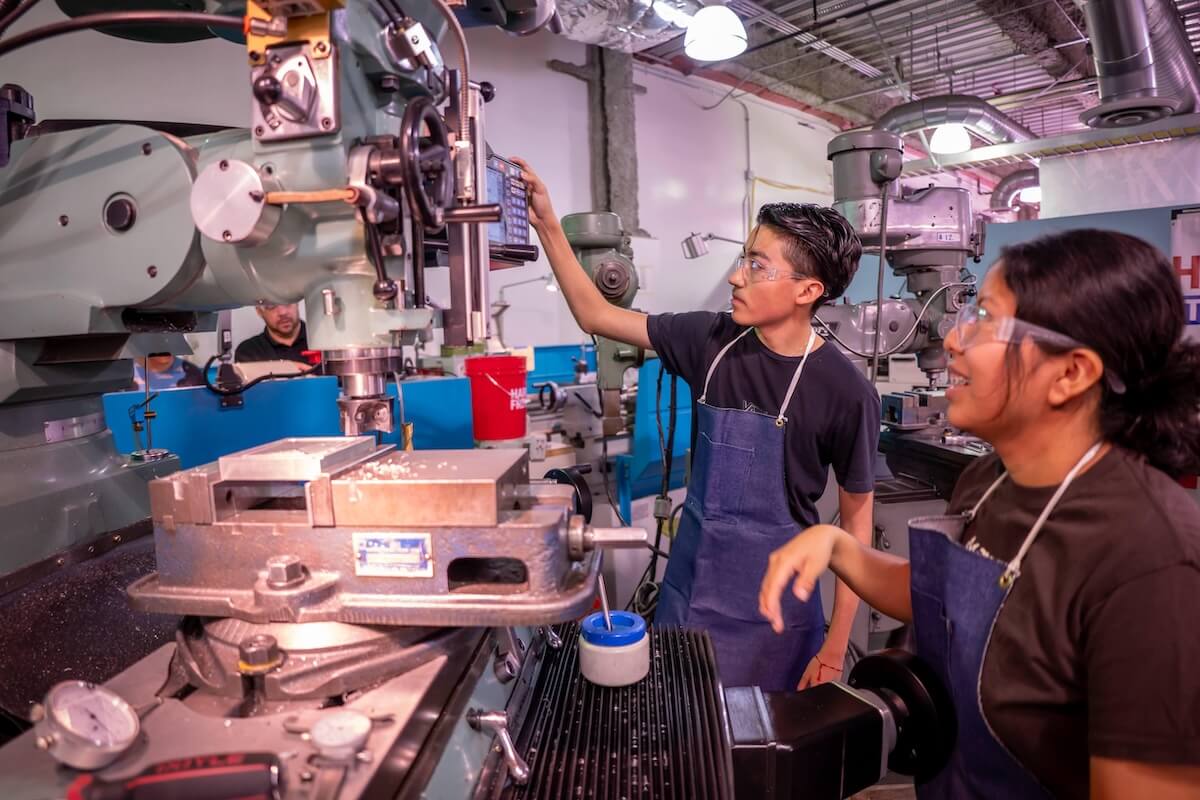
A regional conversation will spotlight Pasadena City College’s expansion of skilled-trades education through the Skills to Rebuild initiative as an example of how institutions can respond creatively to changing economic and workforce needs. The initiative includes new programs for students and the community, as well as plans to build a Regional Career Education and Construction Training Center and a Construction Trades Lab. The groundbreaking for the lab was held earlier this year and construction is expected to be completed next spring. The space will serve as an outdoor classroom where students learn and practice construction skills. The facility will prepare students for careers in the skilled trades while helping build the workforce needed for the region’s recovery and rebuilding.
“In the aftermath of the Eaton fire, Pasadena City College has responded with new
programs and facilities that will accelerate the expansion of our skilled trades workforce,”
said José A. Gómez, president of Pasadena City College. “We are committed to aiding
the recovery and rebuilding of our region. By creating clearer pathways to careers,
and fostering relationships that assist our students with apprenticeships, we build
family-sustaining careers and a better future for all.”
Against the backdrop of Altadena’s historic rebuilding effort, the regional discussion
will explore how sectors can work together to build the workforce the region needs
while creating more pathways to family-sustaining careers and economic mobility.
California’s Next Economy: Building Pathways to Economic Mobility
Wednesday, September 30, 2026
Registration: 8:30 a.m. | Program: 9:00 a.m.–1:00 p.m.
Pasadena City College, Creveling Lounge
1570 E. Colorado Blvd., Pasadena, CA 91106
RSVP: Register for the Summit
Recommended Parking: Lot 3
Media Contact:
Maria Mejia
info@latinoworkingclass.com | 714-854-4765
Media interested in attending or arranging interviews should contact Maria Mejia.
About the Latino Working Class Project
The Latino Working Class Project is a nonpartisan initiative dedicated to understanding, elevating and advancing the priorities of California’s Latino working-class communities. Through research, regional convenings and coalition building, LWCP works to develop practical solutions that expand economic opportunity and upward mobility.
Learn more at latinoworkingclass.com
About Pasadena City College
Since its founding over 100 years ago, Pasadena City College (pasadena.edu) has been a beacon of higher education for residents of the West San Gabriel Valley. Today, PCC educates more than 22,000 students in a wide range of programs for degrees and job-training certificates. The college is a three-time Aspen Institute Top Ten Community College and consistently leads the state for transfer to the UC and CSU systems, as well as public and private universities around the nation.
About The Campaign for College Opportunity
The Campaign for College Opportunity is a nonprofit, nonpartisan coalition working to advance racial and economic justice and build a more equitable, affordable, and workforce-connected higher education system.
10/19/2026

 Schedule of Classes
 Maps
Maps Canvas
 Directory
 Library
 LancerPoint
 Calendars
 Bookstore
 Student Email
 News & Events
 Police & Safety
 PCC Connect
 Parking
 COVID-19 Info